
Loose Threads – Readings on a Theme
Posted in Loose Threads, Monkey read
Tagged book club
Comments Off on Loose Threads – Readings on a Theme
A Throwback
Spring cleaning — read, deleting like 60,000 accumulated emails from my inbox — I ran across this gem, which I haven’t lain eyes on in at least a decade. It’s old, (really old), but it’s still one of my favorite assignment experiences ever.
Bill Valentine retired from the Travelers organization in 2009, after 50-odd years in organized baseball. As a young adult, I spent many beautiful summer nights watching minor league baseball from a box seat on the third-base line at Ray Winder Field. The club moved across the river in 2007, and although minor league baseball still holds a place in my heart, crossing the bridge to North Little Rock and Dickey Stephens Park just never felt the same somehow.
This excerpt is just a fraction of the interview I was so lucky to score with Valentine in 2002 — well begun was a tiny fraction of done once he started reminiscing about his days as a professional baseball umpire. The remainder of the interview is yet to be transcribed.
Umping the Minors: An Interview With Bill Valentine
By Tricia Thibodeaux, July 26 2002
A visit with Bill Valentine can more accurately be described as an audience than an interview, for Valentine has a long history in baseball and is more than willing to share some tales. Now General Manager of the Arkansas Travelers Baseball Club, a double-A team of the Texas League, Valentine is back at home in the ballpark of his childhood, Ray Winder Field in Little Rock. Eighteen years of traveling as an umpire in both minor- and major-league games (1951-1968) and twenty-six years of managing the Travelers (1976-present) have provided Valentine with a unique perspective on organized baseball as well as a seemingly endless stream of entertaining and revealing stories.
I spoke with Bill Valentine about his early days in baseball, in the cool of his office at Ray Winder Field on a scorching July afternoon. Actually, to say we spoke in “his office” is somewhat misleading, in that the general office at the ballpark is actually a general office, accommodating not only the GM but also the Office Manager, Director of Media Relations, and a steady stream of Assistant Managers, grounds crew members, and would-be ticket holders. No wonder, then, that our interview is set against a background (often nearly foreground) of wailing telephones, screeching computer printers, ticking laptop keys and assorted extra voices.
TT: You grew up here in Little Rock?
BV: I was born in Little Rock, 1932, Saint Vincent’s – the old Saint Vincent’s (hospital) – November 30 – November 21, 1932. See, there…
TT: And what did you, what’re your childhood baseball memories?
BV: Childhood? Well, I was born right over here at 4216 West 11th. I mean that’s where my parents lived. So this is 8th, 9th, 10th, that’s three blocks over and about four blocks up, that’s only about seven blocks away. So at about age eight – in those days, there wasn’t child labor laws, you know, nobody was concerned that some kid was liable to come out here and make himself a few dollars and not get home by seven-thirty at night and can’t come in ‘til nine-thirty and can’t pick up a hammer, you know, or, or a rake…they can sit and look at ya, and you can pay ‘em — so at about nine years old I was working out here.
Because things have changed a lot, there was not all the modern conveniences you have. Now then you had, soft drink came in bottles. So they poured ‘em out in cups, and they threw ‘em back in the cases and somebody had to come in and assort ‘em back into the 7-Up cases and the…so that was kids, you know, that was the ideal thing to do. They sold cushions, but they only rented ‘em. Ten cents, you had a cushion, and then at night you just left ‘em in your seats. And we’d go up and collect ‘em. I mean, those were a lot of good jobs that children, young people did. I’d do that. And then, uh, there wasn’t blowers there to blow down the stands, you swept down the stands. So the kids would go in the front and pick up popcorn boxes and Coke cups and things like that because it made it easier, when they were sweeping they didn’t get the big piles and everything.
And, you know, you didn’t have a bunch of plastic bags and throw-aways then; you put ‘em in some bucket and then we actually had a burn. Where the picnic area is at Ray Winder Field (referring to the grassy area beyond the end of the third-base bleachers section), there’s a knoll over there, that’s where they burned everything. And you went over there and, you know, made a big pile and when the day was over you set it on fire. So that used to be pretty level over there. It’s about ten foot high over there; we had to cover it with dirt, ‘cause it had broken bottles, but that’s where you dumped everything. But those are things kids did at the ballpark, so I started out doing that right here. Then I graduated to being in charge of the visiting clubhouse, and then I worked in concessions, you know, just something all the time. But I kinda grew up in this ballpark.
TT: So, your little community sort of baseball ideal was this ballpark.
BV: Right.
TT: Very cool. Did they let you guys play ball on the field?
BV: In the outfield. I had a (looking around) – that picture’s not there – I had a picture hanging here for a long time, I guess it’s gone. I had a picture of us playing out there in right field back in about 1942 or something. (This did not surprise me at all, since the walls of the office are literally filled with photographs and commemorative plaques.)
TT: That’s great. That’s great. Were there other, I guess that’s what everybody did, did the guys, community guys, did they play ball, like pickup games and stuff like that?
BV: No, just strictly it was the Travelers. The Travelers have been a professional baseball team since 1901. (Pointing to photos of Travelers past on the wall) See, some of these old guys, see there’s 1921…
TT: These pictures are great…
BV: They played at, this is Central High School, where the football stadium was. That was called West End Park. And that’s where they played from 1901 up and through 1932. In 1931 they were going to build Central High School’s football stadium, and they asked the Travelers to move ‘cause they were playing football on the field. But it was the Depression and it took ‘em two years to build this ballpark so they didn’t move out here ‘til ’30 — they asked ‘em to move in ’30 — in ’32 they moved out here in April of 1932 and started playing baseball here.
Right up there (motioning to another photograph) you see the streetcar that used to turn around where the parking lot is out front. See it turning around, you can see the ballpark in the background? This was the end of the streetcar line. In, on the right side you can just barely see the ballpark up there. But all of that area, not this front (indicating in the direction of the street) but down there, that parking lot (meaning the reserved parking lot just adjacent to the stadium, on the same side of the street) had a big gazebo in the middle and then had about eight streetcar tracks. And, when they’d bring ‘em out here they’d have fifteen, twenty streetcars waiting for the game to be over and that’s how people got home, they got on the streetcar.
TT: So the crowds were big.
BV: Yeah, they drew very well in those days. The ballpark seated about eight, nine thousand people back then. It was the coolest place to go in the summer. There wasn’t air conditioning. So people’d come outside, you know, in the ballpark. Have you come to ball games here, ever?
TT: Absolutely.
BV: Well, you have a big roof here which you don’t normally notice. That was because it kept the seats from being hot from the sun during the day, you know, on purpose they built the big roof.
TT: Sure.
TT: And so then you went to umpiring, after all that.
BV: Well, I was gonna go to Arkansas State Teacher’s College, now UCA. I had a scholarship for journalism…I thought I was gonna be a big sportswriter…I started umpiring when I was fourteen, doing games around here ‘cause they paid money. And I started over at the Boys’ Club, Lamar Porter Field, and then uh, you know, I guess I was pretty good at it, ‘cause after about a year the men’s umpires would ask me to go umpire with them. And um, back in those days you were getting, like, fifteen dollars a game. So you went out Sunday afternoon, worked two baseball games you got thirty dollars. People were working for twenty-five, thirty dollars a week! And, during the week I’d work the Boys’ Club over there for eight dollars a day, get another thirty-two dollars, now I’m at sixty-two dollars, and I’d come out here and work, made twenty-five dollars, I was making eighty-five, ninety dollars a week. Man, I was, I mean, my dad would come and want to borrow money from me! (laughs) That’s right, I was livin’ in high cotton. Darn right.
TT: You liked it…
BV: Yeah. So I, when I was eighteen my grandmother, she, she called it “empire,” e-m-p-i-r-e, she asked me if I wanted to go to “empire school,” and I said, “Well, there’s one in Daytona Beach, Florida.” And she said, “If you want to go, I’ll pay your way.” So she did. I went down in January to Daytona Beach, spent five weeks, and got a contract to go to the Ohio-Indiana League and until this day I’m the youngest person ever to umpire professional baseball. I was eighteen years old. And there went Teacher’s College and everything else, I never went back. And, I’ve been in it ever since, since 1951, that’s when that was. And I’ve been in baseball ever since.
TT: So, when you were like eighteen, were they mean to you? Were they meaner to you than to the other guys?
BV: First of all, here now in Double-A baseball, what’s the oldest guy on the team, twenty-six? (Phil Elson, Director of Media Relations and game broadcaster, is nearby and this is addressed to him.) He answers:
PE: Our team? Twenty-six, twenty-seven, yeah. Oldest guy in the league’s like thirty-two.
BV: Yeah. Back then, the oldest guy in the league’d be like forty-something. Forty-two. Maybe forty-three. So there was a big difference in age. Big difference in age. And they argued more, ‘cause they were hanging on. These guys kinda think they have a future and they’re going up. In the old days, guys here were not really going, they were hanging, they were coming down, more or less than going up. And they were trying to hang on. Because there wasn’t a big difference between salaries at Little Rock and salaries for the St. Louis Browns. Somebody’d play for the St. Louis Browns and make seven thousand, somebody playing for the Travelers’d make four thousand or five thousand. Now then, you play for the major league club and you make two million, you play for the Travelers you make twenty—you see what I’m saying? There’s a big disparity. But it wasn’t then. So those people kept playing as long as they could hang on. It beat twenty-five or thirty dollars a week.
TT: Sure. Absolutely. So they gave you a fair amount of grief.
BV: Oh, yeah. But I gave it right back.
TT: What’s your favorite grief story?
BV: My favorite grief story? Oh, I don’t know, let’s see, I mean, there’s a lot of stories. You mean about umpiring?
TT: Sure. Or, either way.
BV: Umpiring stories…when I was younger…well, I went to the Ohio-Indiana – no, went to the Longhorn League, and I was joining my partner out there and he was an oil rig—he worked on the oil rig in the off-season. Course, he was about, I was like twenty, nineteen, maybe eighteen, nineteen. I was nineteen, and he was forty, probably. And I went out and joined him in Abilene and he still had these big ol’ wrenches in the back seat of the car.
They used (?) wrenches, they must’ve been three feet long, on them oil rigs and everything. And he still had that stuff in the back of his car. He’d just, he’d worked up until two days before, drove over to Abilene for the league meeting, and this is two stories in one, really. So we leave Abilene going to Big Spring, Texas, to open up, and uh, we hear on the radio, it said that the Longhorn League, it said, “All games in the Longhorn League have been rained out tonight.”
So he said, “Well, no sense in goin’ to, goin’ in there, because once you get by Sweetwater it’s dry all the way out there. So we’ll just stop at Sweetwater and have a coupla beers or somethin’.” And so we stopped at Sweetwater and hung around there three or four hours with some of the other umpires, and we got back in the car and started driving and drove out, got closer, and had the radio on and it said, “…And the only game played in the Longhorn League last night, Big Springs 3, Midland 2.”
And he looked at me and he said, “Well, shake my hand, son, that’s the shortest season we ever had. We didn’t miss a pitch.” They’d shared, there was local umpires — it was a small area — they’d already gone out, of course, they got in touch with them and they worked the game, but we got fined fifteen or twenty dollars, which was a-lott of money in those days.
So now then we open in Big Springs. And, it was just primitive conditions in those days.
In Big Springs you had the baseball park adjacent to the football stadium. And, in center field – ‘way out in center field – there was a gate. And that gate was where we went through, and we dressed in the ladies’ restroom of the football stadium. We had twenty-eight commodes and fourteen wash basins and that was our dressing room out there.
So we had this game, and we went down there and I threw the pitcher out about the fifth inning and then in the last of the ninth there was two outs, a man on second, Big Springs is trailing, and uh, a guy gets a base hit, the Big Springs tying run is coming to the plate, and it’s bang bang and I called him out. And I looked up and I saw Al Sample, I looked up and I saw Al, and he was rrrunning. He’d just taken off from the infield. And he was running toward center field. And I turned around, they were just pouring out of the stands.
So I tell the story, I say, “I passed him about center field.” (He is laughing now at the thought…) But I did get out, we went into that gate and shut it, and locked it, and they out there banging on the gate and everything. And we’re leaving town. So as we left town, we got in our car and the police was waiting on us. And they said, “There’s a lotta people out here, that’re mad at you guys.” So we pull out, and they had two police cars, there was one in front of us and one behind us, and we drove out to the city limits of Big Spring, and these people are following us. Eight or nine carloads of people. And when we get to the Big Spring city limits, the policemen said, “I’m sorry guys, this is as far as our jurisdiction goes.”
So Sample took off driving. And he’s driving, it’s West Texas, it’s just two lanes and sand, and he’s driving on the middle line so nobody can try to pass or try to head us off. And most people peel off and quit after a while but it was one car that just kept following us. And Sample said, “’Bout five miles up here there’s an intersection. When we get up there, I’m gonna pull off to the right, and you jump out, we’ve got those (?) wrenches in the back, you grab one of those (?) wrenches, because we’re gonna get killed if we keep drivin’ at these speeds out here at night, some cow’s gonna come out in the road and we’re gonna get really hurt.”
So he slides, he gets to that intersection and he slides over to the side and he opens up and jumps out, he’s a big, strapping Texan, and he reaches in, and I open a door and I reach in and I grab one, and I get out like this (holding both hands over head, as if wielding a large wrench, then leaning backward), and it just takes me right on over. (Now I am laughing, and he waits until I finish to continue.) And we were on a ravine. And it just takes me right down.
I didn’t have enough sense to let go, I’m holding on and that damn thing is taking me about twenty feet, and I’m just going through the sage brush and everything there, and in those days people had spotlights, you’re too young for that, but cars had spotlights on ‘em. And they’re spottin’ us, this, this bunch that’s pulled up about twenty, forty feet behind, they’re spotlightin’ down there and they’re laughin’ and yellin’ and everything, and they get in their car and they finally turn around and they go back and Sample runs down and says, “Lemme shake ya hand, Buddy, ya saved our lives.” So that’s a story that happened to me early in my career.
TT: (laughing) Well, you know, Fate. Fate takes a hand.
BV: (laughing) I decided, I found out I wasn’t big enough to go into the oil rig business. I knew that right away.
TT: Do people still follow umpires?
BV: No. You don’t have anything like that happen here. Now it’s amazing how much, how much they took it, in those days they took it literally out there in a little ol’ small town like Big Spring, you know. That was their team…
In that same league we were in, we were in Sweetwater and had the game, and like in Ray Winder Field where you have the bleachers and there’s a picnic area, there it was just a little hillside, and the umpires’ room just sat out in the middle of that, a little white building. And, my partner’d (unintelligible) and so forth, and when the game was over, we were sittin’ in there, and he said (sniffing) “You smell somethin’?” I said (sniffing), “Yeah. I smell somethin’.” He said, “Somethin’s burning around here.” The fans had gotten scorecards and stuff like that and popcorn boxes and put ‘em around the umpire room and set ‘em on fire. He opened the room, he said, “Hell it’s fire, they’re tryin’ to smoke us out! Damn fire all around this place!”
They’re out there, fire truck comes…So there was a difference in those days. Yeah, they took it more serious in those little small towns. In West Texas. Ah. Had a drought, I was out there when they had a drought. (To Elson, again) Phil, I never told you this story, they were havin’ a drought
PE: Where was it?
BV: In West Texas.
PE: Okay…
BV: And we went over to a town called La Mesa. And they really weren’t even supposed to water the field. But they’d sneak in there and they’d do it, like, after the game was over, say at one in the morning or so, nobody in the ballpark so the groundskeeper’d turn sprinklers on and so forth and water the field when nobody could see what they were doin’.
PE: Right…
BV: Well we show up, we showed up at La Mesa, had a one o’clock, two o’clock afternoon game, we showed up about noon, they had a sign on the front gate, “Game Postponed.” And we said, “Game postponed! They must’ve had a fire or something.” So we walked inside the ballpark, the infield was just mud! The groundskeeper had turned the sprinkler system on, there wasn’t a system, but a bunch of sprinklers, you know, they’d put ‘em on the infield grass, and gotten drunk. And the damn thing went from one to two, two to three…Chet Fowler, who owned the team, showed up about ten-thirty on Sunday, the water’d been running for ten hours on the infield. We got rained out during a drought in La Mesa, Texas. I never will forget that. (We are all laughing.) All kinda goofy things happened in those days.
Oh, man. And in West Texas in those days they didn’t have air conditioning, they had these, these box air coolers. Did you ever see one? It set in the window. Because it was so dry out there — you didn’t have the humidity that you had here – so they had these boxes. And they’d mount ‘em in the window. And they had straw, like straw filters down three sides, had an old pump in there, and it’d pump the water up and the water would run down there, and it had a big fan in there and it would blow that in the house, it really would be cool! And they could do it out there…they tried it like at Little Rock and so forth, the houses got so musty and damp, but they could do that out there.
TT: Sure…
BV: Well we stayed at an old place out at Abilene called Tex-O-Courts. That was something. That motel, I’m telling you, when Noah built the ark, I think they took the foundation down for the Tex-O-Courts out there. It was old. I tell ya, I’ll tell ya how old it was, we used to laugh about it. When you got in the shower, it was concrete, you know, and it’d broken away, so you had to get in the shower with a balance, because if you got in on one side it would drop about four inches, so you put your feet on both sides, you know what I mean? And it kinda rocked in there while you took your shower, and then you kinda hopped out, ‘cause you put your weight on one side, the whole thing would tilt about five inches. Pop’s Tex-O-Court. So we were staying there, in the wonderful town of Abilene, oh, man, and at Abilene, they had a dressing room for the umpires up under the stands, and it had a commode and a shower, but it was a dirt floor. Now that just shows you how primitive things were, it was just dirt.
And we’d go by a Piggly Wiggly or some kind of a grocery chain and we’d get boxes and we’d break ‘em down and lay the cardboard, you know, down to walk on while we were in there. But we were in this old Tex-O-Court, and it was hot. It was a hundred and five every night. And at night, you’d be layin’ there and you’d wake up hot, and these old filters were so old, they had, and you’d be hearing (makes slurping noise, then again). The straw had fallen down in around that pump. So one of us’d have to get up and go out, we had a couple of concrete blocks layin’ out there. Well, some kinda blocks, they probably weren’t concrete. And we’d have to pull up the filter on that thing and reach in and pull that away from that motor on that pump. You know. And then you’d come back in, and it’d start pumping, and every night at least once or twice that would happen. At least every night. And you’d go and you’d stick your hand in that ol’ mucky water in the dark, and I, oh, ‘til this day I can just see a snake. I’d be half asleep, I’d put my hand in there, and I’d think, “I’m gonna get bit, this is the night, I’m gonna get bit!”
(He pauses.) Wonderful days of the old Longhorn League and the West Texas, New Mexico League. Wow! I was like nineteen, I was havin’ a ball doin’ all that, you know? Havin’ a real ball! Getting paid two hundred and fifty dollars a month. That was a hundred dollars salary and a hundred-fifty dollars expenses.
TT: That was a lot of money I guess?
BV: Five dollars a day expenses, yeah, that’s what you got. Yeah, and a hundred dollars salary. Twenty-five dollars a week salary and a hundred fifty a month expenses.
PE: Was that five dollars a day expenses for food, hotel and everything?
BV: Yeah, the hotel was about, the hotel’d be like, we’d stay in a double room, be about a dollar-and-a-half apiece, breakfast was a quarter, twenty-eight cents, lunch’d be about fifty-five cents…
PE: What could you eat for a quarter?
BV: You’d get, you know, an egg and grits and sausage and toast, you really would, for twenty-eight cents, say for thirty-five or thirty eight cents. Lunch really was fifty-five, fifty-seven cents. At night, at dinner, you know, you’d pay a dollar, dollar-and-a-quarter. So you know, if you had a, say a couple of dollars for the room, you had another three. Beer was a quarter, for goodness sakes, in 1950. And still, Phil, in those days, it was still early enough and that where a lotta bars had a meal.
PE: Okay…
BV: In other words, you’d go in a bar and you had, they had, you probably, have you ever seen — (to me) you’re a bartender – fishbowls, those big ol’ double schooners, they call ‘em fishbowls. You’d get a fishbowl for thirty-five cents, a regular beer for a quarter, you’d get a fishbowl for thirty-five cents. And out there they’d have spaghetti, spaghetti and meat sauce, tomorrow – they had a lotta pasta – tomorrow they might have ziti or somethin’, the next night they might have penne, but it’d be a lot of meat sauces. Um, and I don’t, I don’t remember a lot of pizza. Hell, there wasn’t any pizza places when I was umpiring. I don’t remember ever eating a pizza in West Texas. I don’t think they knew what a pizza was. I really, I mean it. There was not any pizza. But there’d be pasta, I was trying to think, they would have other things. They’d have hot tamale pie. You ever seen that in your life, Phil?
PE: Hot tamale pie? I’ve seen hot tamales, not as a pie, though.
BV: Well, the pie is, is mostly made out of, not grits, but somethin’ like that. It’s in a pan, there’s a thin layer of meat in the middle and the bottom and the top is sort of a cornmeal thing. And on top they lay a little sauce or something, they’d give you a slice, you know. They called that hot tamale pie. But it was free if, if, you know, you went in and you drank. So the umpires, we’d go in there and eat. It’d be near closing anyway, and the guy’d say, you know, “Go ahead and eat all you want, guys, we’re gonna throw it all out,” so we’d eat all this bread and all this spaghetti and have, and have two big schooners, so we’d spend seventy cents and have dinner.
TT: So that was enough, five dollars was enough…
BV: Yeah, we didn’t think any different, you know.
TT: Sure.
BV: And then, you saved a night if you went on a long trip, we’d wait and not check in until six in the morning so that you saved two dollars, you know what I mean? You’d get somewhere about four in the morning, we’d just mess around for about two hours, ‘cause we figured two hours was worth two dollars. I mean, it was goofy (laughing). We’d check out early, we’d check out of hotels early to save, you know, money.
TT: How much was a ticket to the game?
BV: Dollar. Or, fifty cents. For adults a dollar, fifty cents for kids. Box seats was an extra fifty cents. But nooobody got in free. Well, if they had two thousand people, that was two thousand dollars. I mean, roughly. They had fifteen hundred dollars. So cash money. And the concession probably took in a dollar, dollar-and-a-half or so a person, so that’d be another, you know, another, so they’d take in three thousand dollars. That was a lllot of money. Listen, they used to draw a hundred thousand people in Big Springs and those cities. So say they averaged seventy cents a ticket, they took in, you know, seventy thousand dollars. I mean, that was a lot of money. Your ballplayers are making two-fifty a month, three hundred, you know, something like that. And they had concessions on top of that, plus they sold fence signs and programs. You know, the whole thing. So actually they made more money, they actually made money in those days on owning, you know, on owning a franchise.
TT: And so then at some point you went to, you did major league baseball, too, didn’t you?
BV: Yeah, then I went from there to the Texas League. And I worked in the Texas League. And then I went from the Texas League to the Pacific Coast League and I went from the Coast League to the American League.
Posted in Monkeyshines
Comments Off on A Throwback
Fun with AI

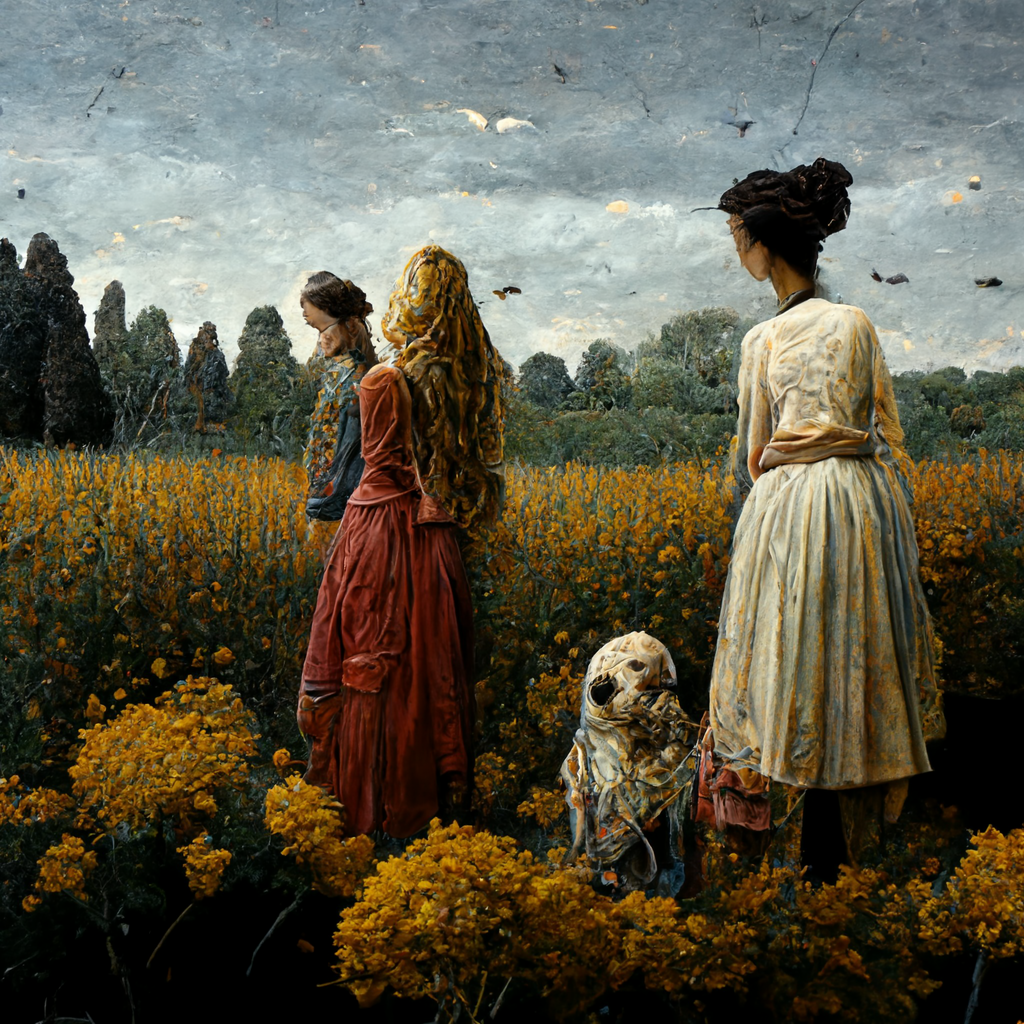
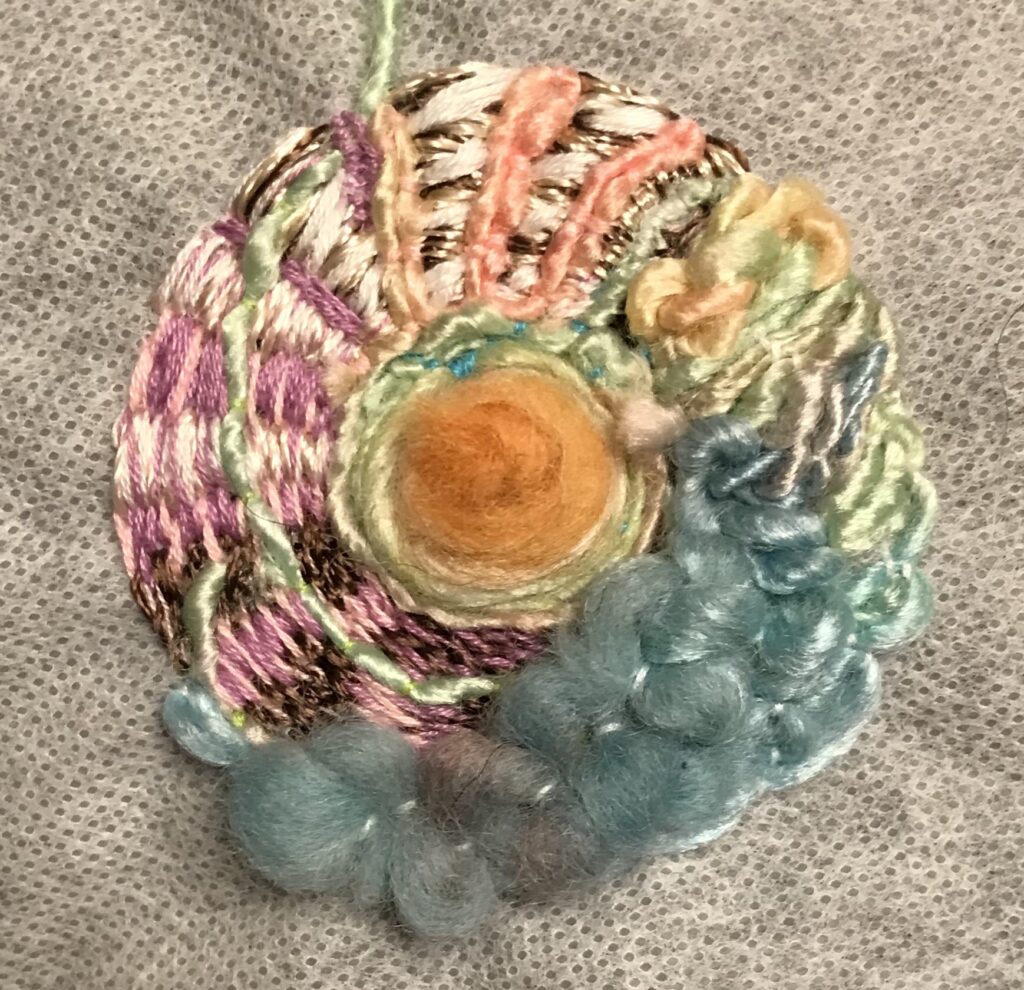
I’ve been playing with Midjourney, my newest AI-art fascination. At top, a “first-roll” image upscaled (but not otherwise adjusted), based on a few abstract nouns.
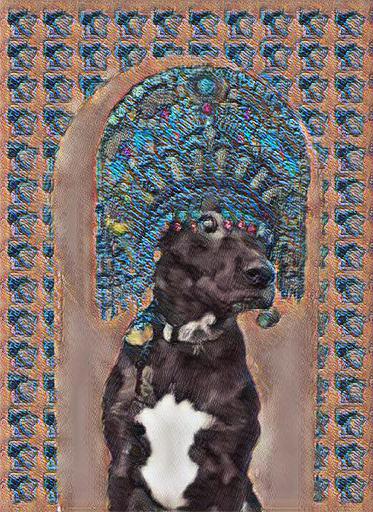
Below, another early attempt with language referencing other artists. I love the weird way the AI blended the dog and cicada into one critter. I shared this on social media, and one of my pet-loving friends asked “Is that a DOGGG???”
Posted in Monkeyshines
Comments Off on Fun with AI
Burning Heart

Posted in Monkeyshines
Comments Off on Burning Heart
Empress love
Posted in Monkeyshines
Comments Off on Empress love
NFTing…
Posted in Monkeyshines
Comments Off on NFTing…
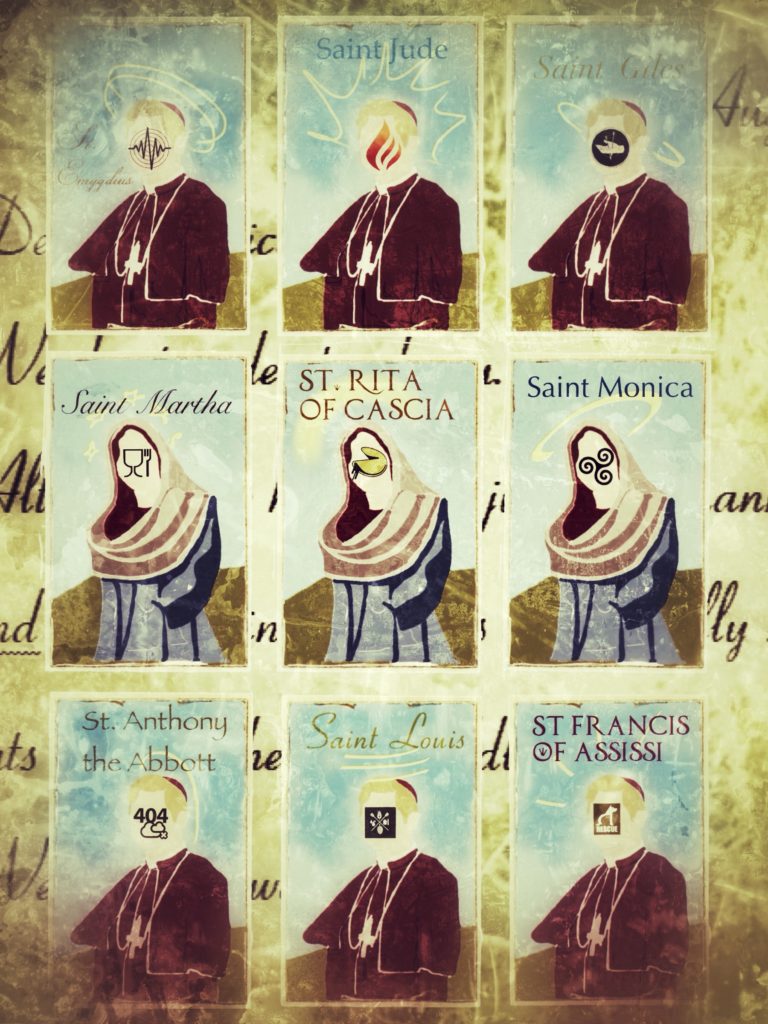
Disaster Saints
Posted in Monkeyshines
Comments Off on Disaster Saints
Gazonga!
Gazonga! was a breast-cancer awareness project in the fall of 2015 Please enjoy this gallery of media and social-media grabs from the project. Questions may be directed to Gazonga’s Facebook page..
-

- It started with a call to action. Hot Springs is a fine arts hotspot, so it seemed like the perfect place.
-

- I distributed some artist’s bills…
-

- …set up a Facebook page…
-

- …and promoted my partner businesses, all located in downtown Hot Springs.
-
- I kept my social media pages updated throughout
-

- I was the featured poet at Wednesday Night Poetry, the longest-continuous-running weekly poetry performance in the nation.
-

- And Red Door Studios was kind enough to host me for a quick interview afterward. I read a poem or two and talked about the Gazonga! project.
-

- At each installation site, a poster naming the artist and work, and providing a QR code for viewers to vote. The QR leads to a page at Shortstack.
-

- “Tales from the South” is a storytelling project which creates live tapings of storytellers reading or telling their tales. It is broadcast on the nearby NPR affiliate. We scheduled a taping of breast-cancer-themed stories for the closing-night party. We also planned to award the artists’s prizes and then auction the works themselves.
-
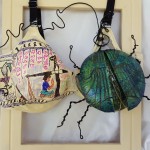
- Life Obliges Us. Mixed media. 2015. T. Thibodeaux Baar
-
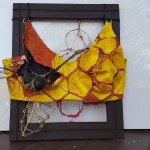
- Love Is Messy, Honey. Mixed media. 2105 T. Thibodeaux Baar
-

- I Never Promised You a Rose Garden. Mixed media. 2015. Linda Constantino. This is the arrangement for installations: the art was hung or posted on an easel in a store window, and signage was placed in or on the window.
Posted in Monkeyshines
Comments Off on Gazonga!
30/30 No. 28: Let Me Tell You, Savannah
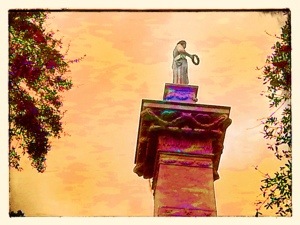
How you can love a place for what it is, even though
it cannot give you the one thing you really want.
How the six Tibetan warrior figures
hard-carved from a traditional marriage bed
almost had me, but I couldn’t get over the irony.
How a place so supposedly haunted
can surprise you by hiding her ghosts away.
How the Ohio children in the hotel lobby make you feel
simultaneously grateful and slightly bereft.
How the impending rain’s scout clouds
made today a temperate but brooding day to walk
and I was loathe to go in.
How everything goes on in your absence
when it would be so nice to know yourself missed.
How everywhere the dogs–so well-adjusted to strangers–
make you realize the only hole created by your absence is inside you.
Posted in 30/30--Loulou Writes a Marathon (+3.8)
Comments Off on 30/30 No. 28: Let Me Tell You, Savannah